


Near the end of last year, one of our long-term clients decided to end our collaboration after being approached by an agency offering a templated, “ecosystem” style of SEO. That’s not unusual. What was unusual was what happened next.
Within weeks of their new website going live, the business experienced a sharp loss in organic visibility, the kind of drop that typically takes months (or longer) to recover from, if it’s recoverable at all.
This article isn’t about naming or shaming. It’s about a lesson we see far too often:
The biggest SEO losses don’t come from Google updates. They come from preventable decisions during major site changes.
The setup: two years of careful, compounding SEO
When we started, we were essentially building from scratch. Over ~2 years, we focused on the kind of work that builds real, durable search equity:
- Local SEO foundations (trust signals, consistency, visibility where local intent matters)
- Carefully optimised service pages (built around how real people search, not keyword stuffing)
- Supporting content to build topical authority and answer real customer questions
- Outreach and local relevance that increases trust and strengthens brand authority
- A fast, well-built website designed to convert targeted traffic (not just “get clicks”)
The result wasn’t “vanity traffic.” It was high-intent visibility that supported the business’s strategic goal: pushing more of their focus offerings.
And it worked. While their overall traffic volumes weren’t massive, the traffic was qualified, and the client shared that two of their top three brands serviced had shifted to the targeted premium brands, driven in large part by the combined effect of SEO + broader marketing alignment.
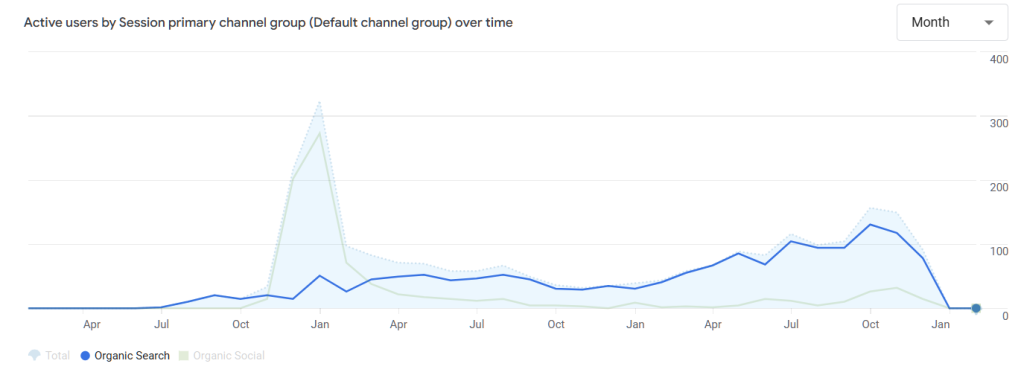
We even started seeing early signs of visibility beyond classic search, including discovery via LLM-driven experiences.
What changed: a new site, built to feed an agency “ecosystem”
After the switch, the new agency launched a website built on a templated, parasitic SEO approach, often characterised by:
- Hundreds (sometimes thousands) of near-duplicate pages
- Scaled, low-value content aimed at “capturing keywords”
- Thin location/service combinations that don’t add real differentiation
- A structure that prioritises their system more than the business’s brand
This approach might look impressive in a sitemap or page count, but it often comes at a cost: quality, relevance, brand clarity, and long-term resilience.
But the biggest issue here wasn’t even the template.
It was the migration.
The core mistake: no proper migration plan (and no redirect mapping)
In the process of launching the new website, they didn’t properly map and implement redirects from the old site, and they also didn’t preserve the valuable supporting content that we built.
That’s the SEO equivalent of:
- Moving premises
- Throwing away your signage
- Changing your phone number
- Then wondering why no one can find you
The outcome was exactly what you’d expect: a major loss in ranking keywords shortly after launch.

When pages disappear without redirects, Google doesn’t “transfer” value automatically. It re-evaluates everything. And if the new site is thin, spammy, or poorly structured, the re-evaluation can be brutal.
Why this hurts more than people realise
A bad migration doesn’t just reduce traffic. It can:
- Kill the pages that drive leads (service + suburb/location intent)
- Break brand discovery (especially for local searches)
- Erase years of trust signals accumulated page-by-page
- Create long recovery timelines, because Google has to relearn the entire site
- Waste budget, because you end up paying again to rebuild what already worked
And the real pain is this: even if you later “fix it,” you may never get back to the same place, because the market doesn’t stand still while you recover.
The takeaway: major online changes need adult supervision
The point isn’t “don’t change agencies” or “don’t rebuild your website.”
It’s this:
Radical changes to your online brand presence should be treated like a business-critical project, not a template swap.
If your new provider can’t explain migration risk in plain English, can’t show you a redirect mapping process, or dismisses the value of your existing content, that’s a red flag.
A simple pre-launch checklist (steal this)
If you (or your client) are ever planning a website relaunch, platform change, or “SEO overhaul,” insist on these minimums:
1) Redirect mapping (non-negotiable)
- Map every important old URL to the best new equivalent
- Implement 301 redirects before launch
- Validate with a crawl (old site + new site + redirect response codes)
2) Content retention strategy
- Identify pages with rankings/links/traffic/conversions (even “small” numbers)
- Keep what works, improve what doesn’t
- Don’t delete supporting content unless there’s a replacement plan
3) Information architecture that matches search intent
- Service pages should exist because they’re useful, not because they’re scalable
- Location pages should earn their place (unique value, not copy/paste)
4) Technical hygiene on day one
- Analytics + tracking verified
- Search Console set up
- XML sitemap + robots.txt checked
- Core templates tested for speed and indexability
5) A post-launch monitoring window
Daily checks for:
- Indexing issues
- Traffic anomalies
- Keyword drops
- Crawl errors
- Redirect failures
What this says about Vine Digital (and why it matters)
We care about outcomes, but we also care about stewardship.
The work we do isn’t “just SEO deliverables.” It’s brand equity, trust, and long-term compounding growth. That’s why we push for careful planning, proper execution, and decisions that protect the assets you’ve already built.
Because when something goes wrong after a rushed migration, the cost isn’t theoretical.
It’s real.
If you’re planning a rebuild, migration, or agency switch…
If you want a second set of eyes before you flip the switch, we can help you sanity-check the plan even if we’re not the ones building the site.
Sometimes the most valuable thing we do is prevent a preventable mistake.
Related Posts
Designing Compliant, User-Focused Forms for Health Organisations in...
Why This Matters In Australian health organisations, online forms are more than tools for capturing leads. They are critical for compliance with the Australian Privacy...
Read MoreWeb Accessibility: What Is It and What Does...
Your website’s design is a crucial element in converting visitors into leads and customers. Even high-quality page content, if displayed poorly, will fail to connect...
Read MoreChatGPT Atlas and the Future of the Informational...
When Google rewired how we find information, websites had to learn SEO.Now AI browsers like ChatGPT Atlas are teaching the internet a new language—one spoken...
Read More